
For a long time, wireless charging was judged by a fairly simple question: does it feel convenient enough to replace a cable? That standard made sense when wireless charging still felt like an alternative rather than a mainstream habit. People were willing to accept a little uncertainty in exchange for the freedom of not plugging in.
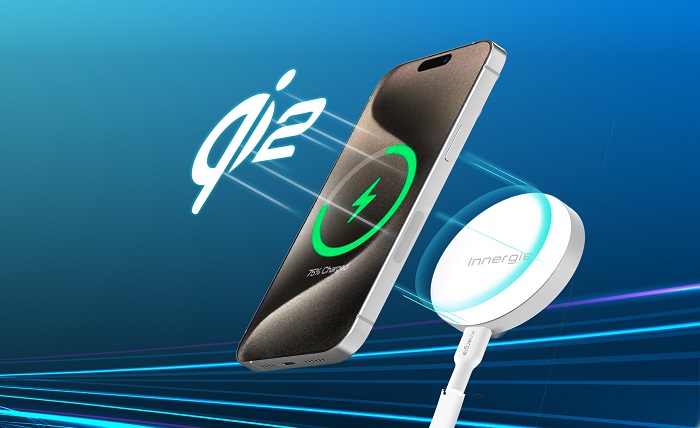
But expectations have changed. Wireless charging is no longer competing only against wired charging. It is now being judged against the pace and rhythm of everyday phone use. People want charging to feel quick to start, easy to trust, and natural enough to blend into the background of the day. That is one reason Qi2 wireless charging matters. The Wireless Power Consortium describes Qi2 as bringing magnetic attachment for better alignment, along with improved energy efficiency, faster charging, and easier usability.
What makes this shift especially important for iPhone users is that the conversation is no longer just about power. It is about confidence. Earlier wireless charging setups often worked, but they could still feel approximate. A phone might need to be nudged into place. A user might glance back to confirm the charging icon appeared. Over time, that small uncertainty shaped how people thought about wireless charging itself. It was useful, but not always fully effortless.
Qi2 changes that expectation because it makes alignment part of the experience rather than an afterthought. When a charger and phone meet with more clarity, the whole interaction feels more resolved. Users do not only notice that the phone is charging. They notice that the act of charging begins with less hesitation. That matters because most charging today happens in ordinary moments, not in ideal test conditions. It happens when someone drops a phone on a nightstand before bed, sets it down on a desk between messages, or tops up the battery while getting ready to leave again.
In those moments, ease is not just a technical benefit. It becomes a behavioral one. The less a charger asks people to stop, check, or readjust, the more likely it is to become part of a routine. That is where expectations start to rise. Once users experience a charging method that feels more certain, they stop evaluating all chargers by raw output alone. They begin to care just as much about how naturally charging fits into the flow of the day.
Apple’s current support guidance reflects that broader shift. Apple says iPhone can charge wirelessly with Qi-certified chargers, and for faster wireless charging it recommends using either a MagSafe Charger or a Qi2-certified wireless charger. That matters because it moves Qi2 from being a niche spec discussion into something more practical. It signals that iPhone users are no longer just choosing between wired and wireless. They are choosing between different levels of wireless experience.
This changes what people expect from a Wireless Charger for iPhone. In the past, many users would have been satisfied with a charger that simply worked often enough. Now, more of them want clearer placement, fewer interruptions, and a setup that feels dependable every time they set the phone down. Charging is no longer seen as a separate task that happens only when battery anxiety appears. It is becoming part of normal device behavior, something that should feel as smooth as placing a phone on a familiar surface.
That shift also changes how people define convenience. Convenience used to mean not carrying or plugging in a cable. Now it increasingly means not having to think very much at all. A charger feels better when it provides the kind of clarity that lets users move on immediately. They do not want to wonder if they missed the center of the pad or whether the phone will still be charging ten minutes later. They want the interaction to feel settled from the moment it begins.
For iPhone users in particular, that matters because the device is handled so frequently. It is picked up to check notifications, respond to messages, pay for things, navigate, capture photos, and manage work. Charging has to fit around those repeated actions. A system that feels more precise and repeatable naturally raises the standard for what good charging should be. Users begin to expect not only power delivery, but alignment, ease, and consistency.
This is why Qi2 is influencing perception even beyond the technical layer. It is teaching users to expect more from wireless charging as a whole. Once alignment and confidence improve, older experiences can start to feel less polished. People begin to notice the extra second of adjustment, the need to double-check placement, or the small friction that used to feel normal. In that sense, Qi2 is not just improving a charging method. It is changing the baseline expectation for what wireless charging should feel like.
That does not mean every user suddenly needs the same setup or has the same priorities. Some still care most about fast wired charging. Others value minimalist desk setups or bedside convenience. But the larger change is already visible. A Wireless Charger for iPhone is increasingly expected to do more than power the device. It is expected to feel intuitive, stable, and easy enough to disappear into a daily routine.
In the end, that is why Qi2 matters. The real change is not only faster charging or better alignment on paper, even though both are part of the standard. The bigger change is psychological. Qi2 teaches users that wireless charging can feel more certain, more immediate, and more natural than it often did before. And once that expectation is set, it becomes very difficult to go back.